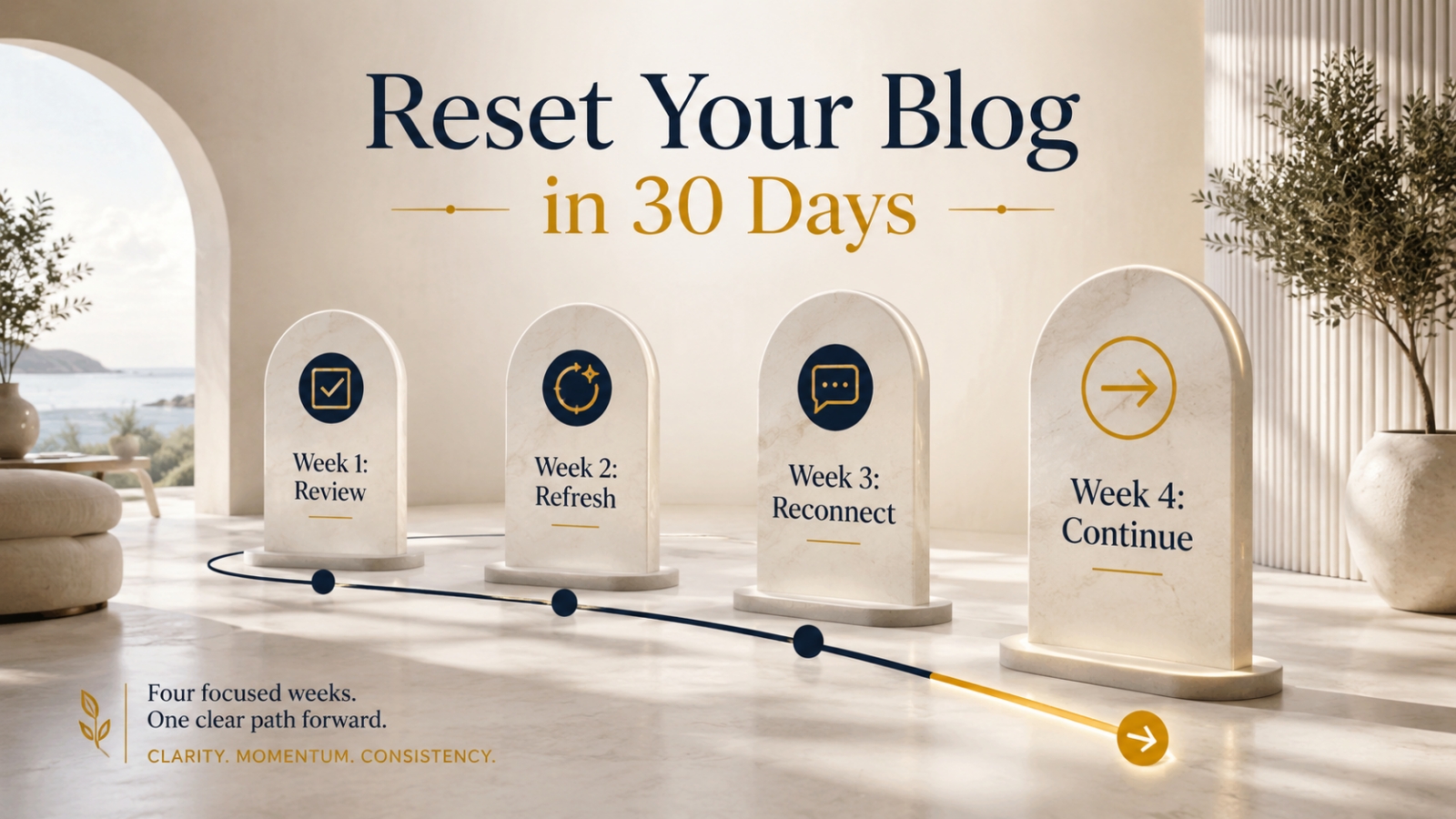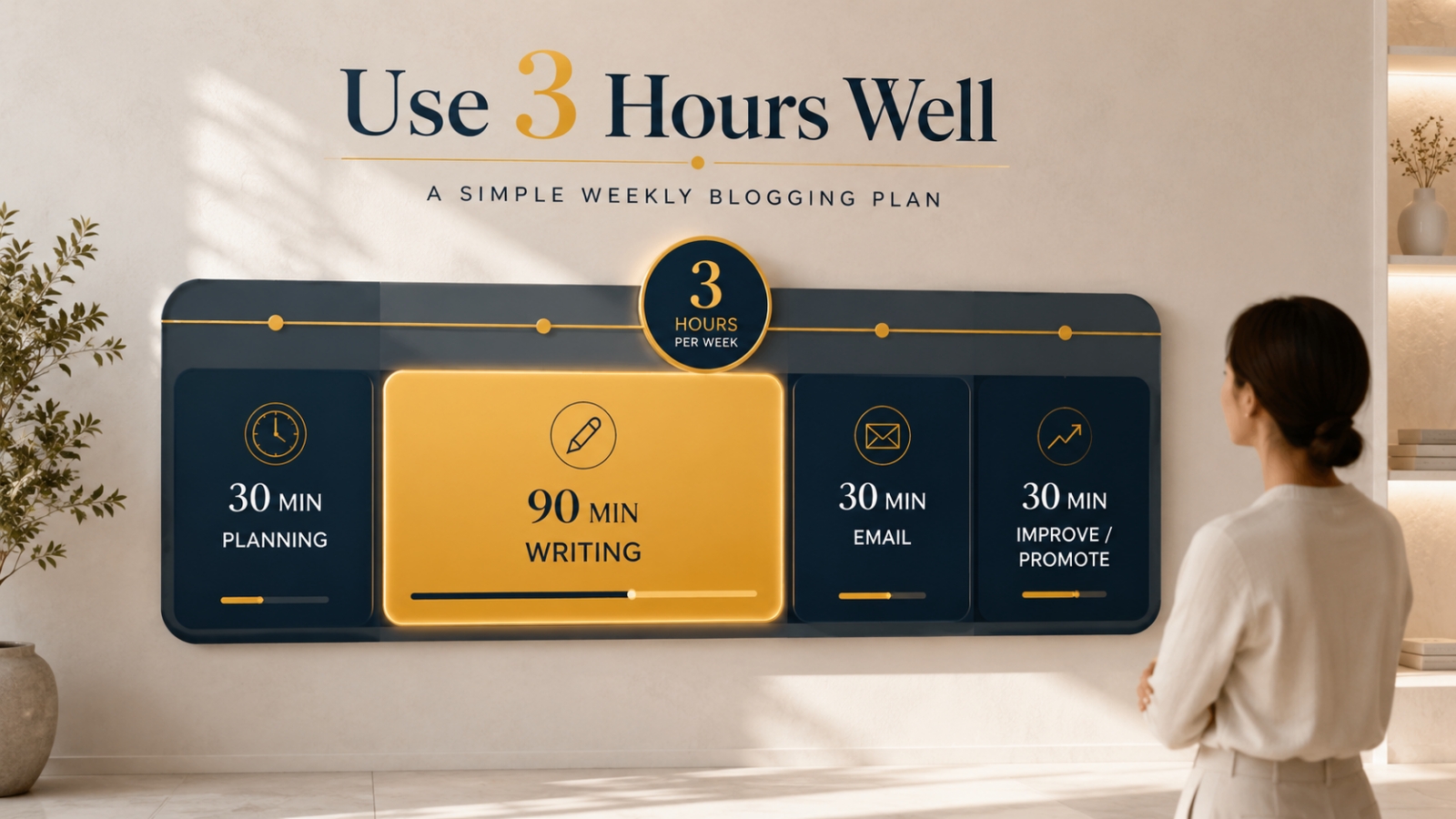

A gentle reactivation guide for returning to your blog with one useful step.
Stopping can feel heavier than starting.
When you first began blogging, there may have been excitement.
A fresh idea.
A clean plan.
A few posts.
A sense that something was finally moving.
Then life happened.
Work got busy.
Family needed attention.
The routine broke.
The ideas felt less clear.
One missed week became one quiet month.
And now, when you think about returning, a small voice may say:
“Maybe I should just start over.”
That voice is understandable.
But it may not be telling the truth.
You do not always need a new blog, new niche, new brand, or new plan.
Sometimes, you simply need to return to one useful step.
A Blogging Pause Does Not Erase Your Progress
If your blog went quiet, it does not mean everything you built is wasted.
The posts still exist.
The lessons you learned still count.
The ideas you collected may still be useful.
The readers you helped were still helped.
The work did not disappear just because the rhythm stopped.
Think of it like a walking path you have not used for a while.
The path may have leaves on it.
A few branches may be in the way.
Some parts may need clearing.
But the path is still there.
You do not need to build a brand-new road.
You can clear one small section and begin walking again.
Your blog can work the same way.
The Big Mistake Bloggers Make After a Pause
The big mistake is turning a pause into a full restart.
This happens often.
A blogger stops publishing for a while.
Then, when they return, they feel uncomfortable looking at the old blog.
So they think:
- I need a new niche.
- I need a new design.
- I need a new content plan.
- I need to delete old posts.
- I need to explain where I went.
- I need a big comeback announcement.
- I need to relaunch everything properly.
That sounds productive.
But it can become another delay.
Instead of returning, you start rebuilding.
Instead of writing one useful post, you spend weeks thinking about a new direction.
Instead of reconnecting, you stay hidden because the restart feels too big.
A gentler approach works better.
Do not restart from zero.
Return through one useful step.
The Simple Blog Reactivation Framework
Use this framework when you want to return after a blogging pause:
- Release the guilt
- Review what still matters
- Choose one useful step
- Publish or improve one thing
- Rebuild a simple rhythm
That is enough to begin.
You do not need a dramatic relaunch.
You need movement.
Step 1: Release the Guilt
Before you touch the blog, let go of the guilt.
Guilt makes returning harder.
It turns a practical task into an emotional burden.
Instead of asking:
Why did I stop?
Ask:
What is one useful thing I can do next?
That question is kinder.
It is also more productive.
You do not need to punish yourself into consistency.
You need a simple path back.
A blogging pause may have happened for many reasons.
Life got full.
The plan was too heavy.
The niche was unclear.
The routine did not fit.
You were tired.
You needed space.
You lost direction.
Whatever the reason, the next step is still the same.
Return gently.
Step 2: Review What Still Matters
Before creating something new, look at what already exists.
Open your blog and review:
- your published posts
- your saved drafts
- your content ideas
- your email list
- your lead magnets
- your product ideas
- your reader questions
- your old notes
Do not review everything to judge it.
Review it to find what still has life.
Maybe one old post still feels useful.
Maybe one draft has a good idea inside it.
Maybe one reader question still deserves an answer.
Maybe one topic still fits your current direction.
You are looking for one small doorway back.
Step 3: Choose One Useful Step
Now choose one step.
Only one.
Not a full relaunch plan.
Not a 90-day content calendar.
Not a full website redesign.
One useful step.
Examples:
- update one older post
- write one short new post
- send one email to your list
- choose one topic for next week
- improve one blog intro
- refresh one lead magnet
- outline one helpful article
- add one CTA to an old post
- review one product idea
The step should be small enough to finish.
That matters.
Finishing one small step rebuilds confidence faster than planning ten large ones.
Step 4: Publish or Improve One Thing
After a pause, do not wait until the whole system feels ready.
Create one small sign of life.
You can publish something new.
Or improve something old.
Both count.
If writing a new post feels too heavy, update an existing one.
If updating an old post feels boring, write a short article answering one reader question.
If publishing feels like too much, draft one email first.
The goal is not to impress people.
The goal is to restart movement.
A quiet, useful action is enough.
Step 5: Rebuild a Simple Rhythm
Once you complete one step, choose a rhythm you can return to.
Keep it light.
For example:
- one blog post every two weeks
- one email each week
- one old post refresh each month
- one planning session every Monday
- one review session at the end of each month
Do not choose an intense routine just because you feel behind.
That usually creates more pressure.
A realistic rhythm is better.
Your goal is not to make up for the pause.
Your goal is to rebuild trust with yourself.
Worked Example: Returning After a Three-Month Blogging Pause
Let’s imagine a blogger who helps beginners create simple digital products from PLR content.
They published several posts months ago, then stopped.
Now they want to return, but they feel stuck.
What They Should Not Do
They should not immediately decide:
- the whole blog is wrong
- the niche must change
- the design needs a full rebuild
- every old post must be deleted
- they need a huge relaunch campaign
That would make returning heavier.
What They Can Do Instead
They review the old content and notice one post still feels useful:
How to Use PLR Without Sounding Generic
The post is still relevant, but it could be stronger.
So they choose one useful step:
Update the post with a better example and a clearer CTA.
That is manageable.
Then they send one short email:
If you have PLR sitting unused, you may not need more content. You may need to make one piece sound more like you. I updated this guide to help with that.
Now the blog has movement again.
No big relaunch.
No drama.
Just one useful step.
Why One Step Works Better Than a Big Restart
One step works because it reduces pressure.
A big restart says:
Everything must be fixed before I return.
One step says:
I can move again today.
That difference matters.
Momentum often returns after action, not before it.
You may not feel fully confident when you begin.
That is okay.
Confidence grows when you see yourself completing small useful actions again.
One updated post.
One email.
One outline.
One improved CTA.
One reader reply.
That is how the rhythm comes back.
What to Do If Your Old Blog Feels Embarrassing
This is common.
You may look at old posts and think:
“I would not write it like that now.”
Good.
That means you grew.
Old content is not proof that you failed.
It is proof that you started.
You do not need to delete everything just because your skill improved.
Instead, choose one of three options.
Option 1: Keep It
If the post is still useful, leave it.
Not every post needs to be perfect.
Option 2: Improve It
If the topic is good but the writing is weak, refresh it.
Improve the title, intro, structure, examples, or next step.
Option 3: Remove or Redirect It
If the post no longer fits your direction, you can remove it, combine it with another post, or redirect it later.
But do not begin by deleting everything.
Begin by finding what still supports your path.
What to Say to Your Email List After a Pause
You do not need a long apology.
You do not need to explain every detail.
You can simply return with value.
For example:
Hi {{ subscriber.first_name | capitalize }},
It has been a little quiet here, but I wanted to return with something useful.
If you have been trying to build your blog again after losing momentum, this new guide may help. It shows why you do not need to start over. You only need one useful step back into motion.
You can read it here:
[Insert Link]
That is enough.
Most readers are not tracking your silence as closely as you think.
They are busy too.
Return with something useful.
That is the best re-entry.
What to Avoid When Returning to Blogging
Mistake 1: Making a Huge Comeback Plan
A big comeback plan can feel exciting.
But it can also delay the return.
Start smaller.
Complete one action first.
Mistake 2: Apologizing Too Much
It is fine to acknowledge the pause.
But do not make the whole message about guilt.
Lead with usefulness.
Mistake 3: Deleting Everything Too Quickly
Do not erase old work just because it feels imperfect.
Review it calmly.
Improve what still fits.
Remove only what clearly no longer belongs.
Mistake 4: Choosing an Unrealistic Schedule
Do not return with a daily publishing promise if you could not keep a weekly rhythm before.
Choose a rhythm you can actually repeat.
Mistake 5: Waiting Until You Feel Ready
You may not feel ready before you begin.
Start with one small action.
Readiness often arrives after movement.
Quick Exercise: Choose Your One Return Step
Use this worksheet if your blog has gone quiet.
My Blog Paused Because:
[Write the simple reason without judging yourself.]
One Thing I Already Created That Still Matters Is:
[Write one post, draft, idea, resource, or product.]
One Useful Step I Can Take This Week Is:
[Choose one small action.]
I Will Complete It By:
[Write the day.]
My Simple Return Rhythm Will Be:
[Write a realistic rhythm.]
Example:
I will update one old post this week and send one short email about it. Then I will publish one useful post every two weeks.
That is a return plan.
Simple.
Calm.
Doable.
Final Thought: Return to the Path, Not the Pressure
If you stopped blogging, you do not need to start over.
You need a way back in.
Not through guilt.
Not through a huge relaunch.
Not through a brand-new identity.
Through one useful step.
Review what still matters.
Choose one action.
Publish or improve one thing.
Then rebuild a rhythm you can keep.
Your pause did not erase your progress.
Your old work still taught you something.
Your next step does not need to be dramatic.
It just needs to move you forward.
So do not ask:
How do I rebuild everything?
Ask:
What is one useful step I can take next?
Start there.
That is enough to return.
Use This With Blogger’s Success Toolkit
If you already own Blogger’s Success Toolkit, log in to the Blogger Success Blueprint members area and use the planning resources to choose one simple return step.
Start with one post, one email, one improved resource, or one realistic rhythm.
Members Login:
https://bloggersuccessblueprint.com/members/
New to Blogger’s Success Toolkit?
Blogger’s Success Toolkit gives you a beginner-friendly path to choose your direction, plan useful content, write stronger titles, and begin building your blog or product path with more structure.