How to confirm, orient, and guide new subscribers with one simple first message
Someone just trusted you with their inbox.
That may sound small.
But it matters.
They clicked.
They signed up.
They asked for your checklist, guide, template, or resource.
Now they are waiting to see what happens next.
Will the email be clear?
Will the resource be easy to find?
Will they know what to do with it?
Will they feel like they joined something useful?
That first email quietly sets the tone.
If it feels warm, clear, and helpful, the relationship begins well.
If it feels confusing, cold, or overloaded, the subscriber may drift away before they ever get to know you.
That is why your welcome email deserves more care than a rushed “Here’s your download” message.
Why the First Email Matters
Your welcome email is the first real step after someone joins your list.
Before that, they may have read one of your posts.
They may have liked your voice.
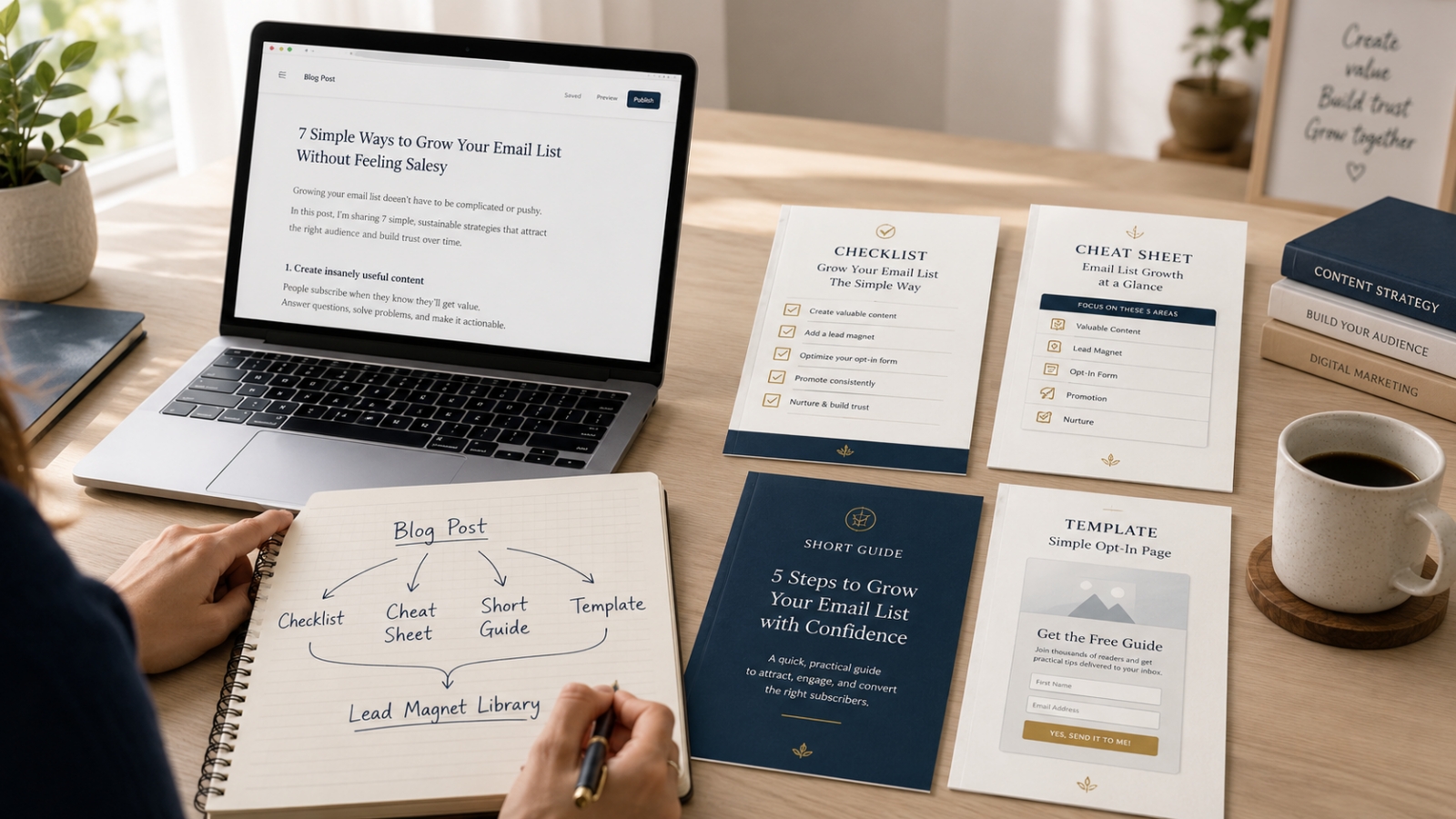
They may have downloaded a checklist, cheat sheet, short guide, or template.
But the welcome email is where the relationship becomes more direct.
It shows the subscriber:
- what they joined
- what they received
- how to use it
- what kind of help they can expect from you
- what simple step to take next
That is a lot for one email.
But the email does not need to be long.
It needs to be useful.
A good welcome email helps the subscriber think:
“Yes, I am in the right place.”
That small feeling builds trust.
The Big Mistake: Sending the Freebie and Disappearing
Many beginners treat the welcome email like a delivery receipt.
They send the link and stop there.
Something like:
Thanks for signing up. Download your guide here.
That is not wrong.
But it is thin.
It delivers the file, but it does not guide the subscriber.
It does not explain how to use the resource.
It does not tell them what to expect next.
It does not make the relationship feel warmer.
We have all had that experience.
You sign up for something, the email arrives, and technically, the link is there.
But you are not quite sure what to do next.
Should you read it now?
Should you print it?
Should you expect more emails?
Who is this person again?
The guidance is missing.
Imagine someone walks into a small workshop for the first time.
You hand them a tool and walk away.
They may have the tool, but they may not know where to begin.
A better welcome email says:
“Glad you’re here. Here’s what you came for. Here’s how to use it. Here’s what happens next.”
That small difference matters.
The Simple Welcome Email Framework
A strong welcome email does not need to be fancy.
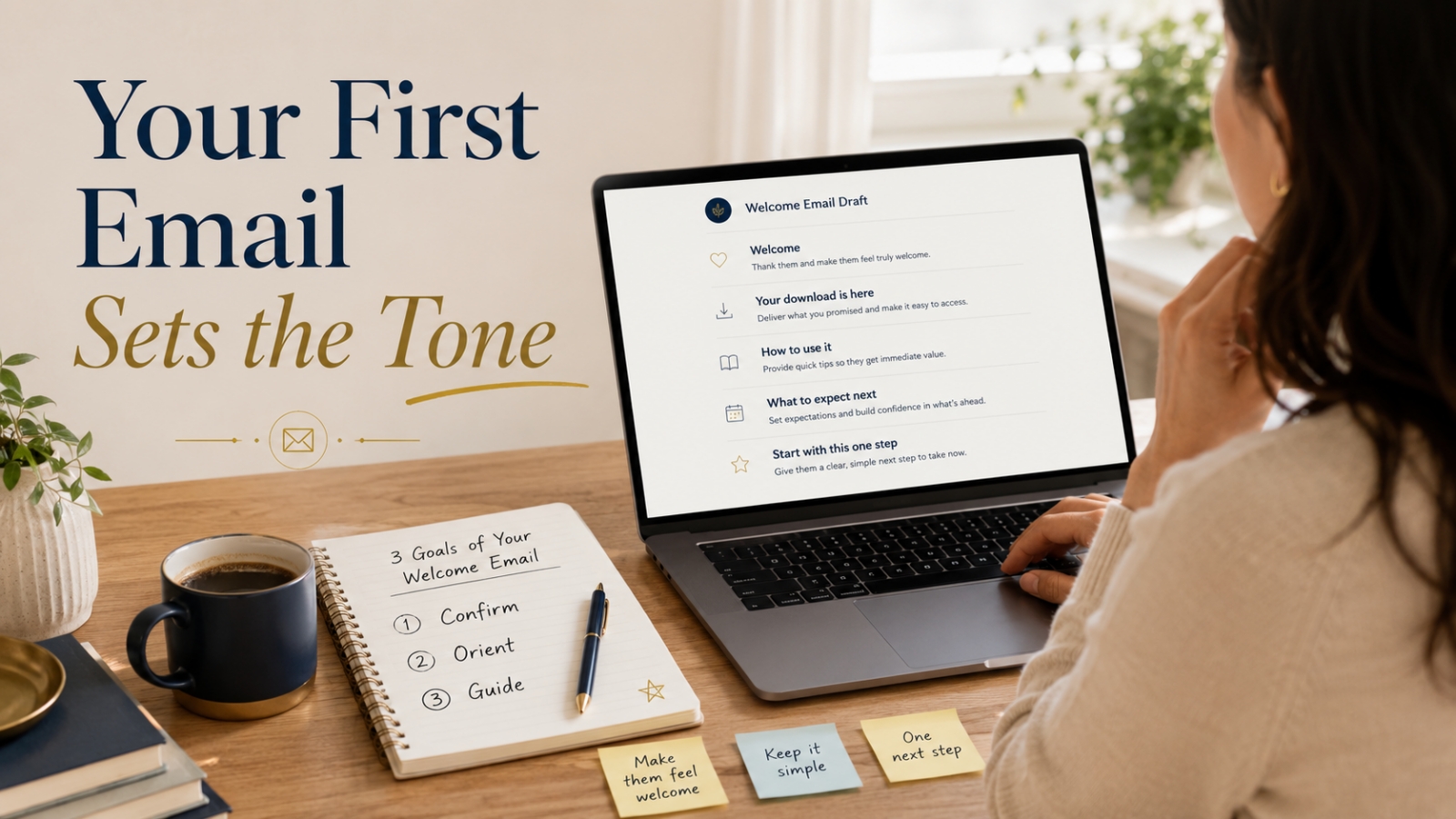
Use this simple structure:
- Welcome them warmly
- Confirm what they joined
- Deliver the resource
- Explain how to use it
- Set expectations
- Give one simple next step
Let’s walk through each part.
Step 1: Welcome Them Warmly
Start with a human welcome.
Not stiff.
Not overly formal.
Just warm and clear.
For example:
Simple Welcome Line
Hi Sarah, welcome — I’m glad you’re here.
That is enough.
You do not need a dramatic opening.
The goal is to make the subscriber feel noticed.
They took a small step toward you.
Acknowledge it.
Step 2: Confirm What They Joined
People subscribe quickly.
Sometimes they forget exactly what they signed up for, especially if they joined from a blog post, social link, or resource page.
So remind them.
For example:
Confirmation Line
You joined to get the Calm Morning Checklist, a simple one-page guide to help your mornings feel less rushed.
This confirms the reason they are receiving the email.
It also reduces confusion.
That matters because a confused subscriber is less likely to keep opening your emails.
Clarity protects trust.
Step 3: Deliver the Resource Clearly
Give them what they asked for.
Make the link easy to find.
Do not bury it under several paragraphs.
For example:
Delivery Line
You can download the Calm Morning Checklist here:
[Download Link]
Simple.
Clear.
Expected.
If the resource is the reason they joined, deliver it early.
The subscriber should not have to hunt for it.
Step 4: Explain How to Use It
This is where many welcome emails become much stronger.
Do not assume the subscriber knows what to do with the resource.
Give them one simple usage note.
For example:
Usage Note
Use the checklist tonight before bed. Choose one or two items to prepare for tomorrow morning. You do not need to do everything at once. Start with the easiest step.
That is helpful.
It turns the resource from “another download” into something they may actually use.
And when subscribers use your resource, they are more likely to trust your future emails.
Step 5: Set Expectations
Tell subscribers what they can expect from you.
This does not need to be long.
For example:
Expectation Line
Over the next few emails, I’ll send you simple ideas to help your mornings feel calmer, more organized, and easier to repeat.
Now the subscriber knows why future emails are coming.
They are less surprised.
They feel more oriented.
That is the beginning of good email onboarding.
You are not just sending messages.
You are helping someone understand the path they just stepped into.
Step 6: Give One Simple Next Step
Do not end with too many choices.
Give one clear action.
For example:
Next-Step Line
Before tomorrow morning, choose one thing from the checklist and prepare it tonight. That small step is enough to begin.
This is simple.
It helps the subscriber act.
It also creates a small win.
Small wins matter because they help the subscriber think:
“This was useful.”
That is what you want your first email to create.
Worked Example: A Welcome Email for a Morning Routine Checklist
Let’s put the structure together.
Imagine your lead magnet is:
The Calm Morning Checklist
The reader is a busy working adult who feels rushed before leaving the house.
They downloaded the checklist because mornings feel messy.
Here is a simple welcome email structure.
Subject Line
Your Calm Morning Checklist is here
Email Body
Hi [Name],
Welcome — I’m glad you’re here.
You joined to get the Calm Morning Checklist, a simple one-page guide to help your mornings feel less rushed.
You can download it here:
[Download Link]
Here’s the easiest way to use it:
Do not try to change your whole morning at once. Tonight, choose one or two items from the checklist and prepare them before bed.
That might mean setting out your clothes, placing your keys near the door, or choosing one simple breakfast option.
Over the next few emails, I’ll send you more simple ideas to help your mornings feel calmer and easier to repeat.
For now, start small.
Choose one thing from the checklist and prepare it tonight.
Talk soon,
[Your Name]
That email is not long.
But it does the job.
It delivers the resource.
It explains the first step.
It tells the subscriber what happens next.
And most importantly, it feels like a real person is guiding them.
Why This Welcome Email Works
The example works because it respects the subscriber’s attention.
It does not try to teach everything.
It does not introduce five different offers.
It does not overwhelm the reader with a long story.
It simply helps them take the next step.
It Confirms the Signup
The subscriber knows why they are receiving the email.
It Delivers the Resource
The checklist link is easy to find.
It Explains How to Begin
The subscriber knows what to do with the checklist.
It Sets Expectations
They know more helpful emails are coming.
It Gives One Action
They have a simple task for tonight.
That is enough for a strong first email.
What to Include in a Good Welcome Email
A welcome email can be simple, but it should not feel empty.
Here are the key parts to include.
A Warm Greeting
Make the email feel personal.
Even a short line like “I’m glad you’re here” can help.
The Resource They Requested
Deliver what they signed up for.
Make it obvious.
A Short Usage Note
Tell them how to use the resource.
This helps them get value faster.
A Simple Expectation
Let them know what kind of emails they will receive.
This reduces confusion later.
One Next Step
End with one action.
Not five.
One.
What to Avoid in Your First Email
Avoid Making It Too Long
Your first email should not feel like a full course.
Keep it focused.
The subscriber just joined.
Help them take one step.
Avoid Promoting Too Quickly
Do not rush into a big pitch immediately unless the signup clearly promised that.
Start with trust.
Deliver value first.
Avoid Sending Only a Download Link
The link matters, but guidance matters too.
Tell them how to use what they downloaded.
Avoid Giving Too Many Next Steps
Too many choices create friction.
Choose the most useful next step and guide them there.
Avoid Sounding Cold or Automated
Even if the email is automated, it should not feel robotic.
Write like a real person welcoming another real person.
A Simple Welcome Email Template
Use this template for your own welcome email.
Subject
Your [Resource Name] is here
Hi [Name],
Welcome — I’m glad you’re here.
You joined to get [Resource Name], which will help you [simple benefit].
You can download it here:
[Download Link]
Here’s the easiest way to use it:
[Give one simple usage instruction.]
Over the next few emails, I’ll send you [what they can expect].
For now, start with this:
[One simple next step.]
Talk soon,
[Your Name]
This template is simple, but strong.
It gives the subscriber a clear beginning.
Quick Exercise: Draft Your Welcome Email
Use these prompts.
What Did They Sign Up For?
[Name the lead magnet or reason they joined]
What Does It Help Them Do?
[Write the simple benefit]
Where Do They Get It?
[Add the download link or access instruction]
How Should They Use It First?
[Give one simple instruction]
What Should They Expect Next?
[Explain your upcoming emails briefly]
What Is Their One Next Step?
[Write one clear action]
If you can answer these, you can write a useful welcome email.
You do not need to overcomplicate it.
Final Thought: The First Email Sets the Tone
Your welcome email is the first handshake after someone joins your list.
Make it warm.
Make it clear.
Make it useful.
Do not overwhelm the subscriber.
Do not disappear after the download.
Give them access.
Give them clarity.
Give them one simple next step.
That first email can help a new subscriber feel supported right away.
And when people feel supported, they are more likely to keep opening, reading, and trusting what you send next.
Use This With Blogger’s Success Toolkit
If you already own Blogger’s Success Toolkit, log in to the Blogger Success Blueprint members area and review your first welcome email.
Check whether it gives the subscriber three things:
- access to what they requested
- clarity on what to expect
- one simple next step
If one of those pieces is missing, improve that part first.
Members Login:
https://bloggersuccessblueprint.com/members/
New to Blogger’s Success Toolkit?
Blogger’s Success Toolkit gives you a beginner-friendly path to choose your direction, plan useful content, write stronger titles, and begin building your blog with more structure.