A simple guide to making your content clearer by understanding the reader first
Have you ever tried to write something helpful, but the words came out too general?
You knew the topic.
You had the main idea.
You even had a few useful points.
But the article still felt flat.
Not wrong.
Just a little foggy.
That usually happens when the reader is not clear enough.
You are writing to “people.”
Or “beginners.”
Or “anyone who needs help.”
That sounds wide and welcoming.
But wide is not always strong.
When you try to write for everyone, your content can end up sounding like it was written for no one in particular.
The clearer the reader, the stronger the content.
That is the heart of this lesson.
Why Audience Clarity Matters
Your reader shapes everything.
The opening.
The examples.
The tone.
The level of detail.
The next step.
A beginner needs different help from someone with experience.
A busy parent needs different examples from a college student.
A small business owner needs a different angle from someone managing a household budget.
When the reader is clear, your writing becomes easier because you are no longer speaking into a crowd.
You are speaking to one person with one real situation.
That changes the whole feel of the post.
Your content becomes more specific.
And specific content often feels more useful.
The Big Mistake: Writing for “Everyone Who Is Interested”
This is one of the most common beginner mistakes.
You choose a topic and think:
“This could help anyone.”
Maybe it could.
But if you write it that way, the advice may become too broad.
Let’s say the topic is saving money.
That could apply to almost anyone.
But the advice changes depending on the reader.
A student trying to save money on meals does not need the same article as a young couple saving for a home deposit.
A retiree managing fixed expenses does not need the same examples as a new parent buying baby supplies.
The topic may be the same.
But the reader’s world is different.
And when the world is different, the content should feel different too.
The Reader Clarity Framework
Before writing your next post, use this simple framework.
It helps you move from a blurry audience to a clear reader.
Step 1: Choose One Type of Reader
Do not begin with everyone.
Begin with one clear reader group.
For example, instead of:
People who want to save money
Choose:
A young couple trying to lower grocery spending while saving for their first home
That is much clearer.
Now you can imagine the situation.
They are checking prices.
They are trying not to waste food.
They want to save, but they still need meals that feel normal.
They may feel a little tired of hearing “just stop spending.”
That gives your writing more empathy.
Step 2: Name Their Real Situation
A reader is not only a demographic.
They are a person in a moment.
Ask:
What is happening in their life right now?
For our example:
They want to save for a home deposit, but weekly grocery spending keeps creeping up.
That is more useful than saying:
“They want money tips.”
The real situation gives your post emotional weight.
It helps you write closer to the reader’s life.
Step 3: Understand What They Are Feeling
Good content does not only address the practical problem.
It also understands the feeling behind it.
The young couple may feel:
- frustrated
- hopeful
- stretched
- guilty after overspending
- unsure where the money is going
- tired of advice that feels unrealistic
When you understand that, your tone changes.
You do not sound cold.
You sound supportive.
Instead of saying:
“Cut unnecessary expenses.”
You might say:
“If your grocery bill keeps surprising you, it does not mean you are careless. It may simply mean your shopping routine needs a clearer plan.”
That feels different.
It helps the reader stay open.
Step 4: Clarify What They Want
Your reader does not only want information.
They want a result.
In our example, they may want:
- a smaller grocery bill
- less food waste
- fewer last-minute purchases
- a simple weekly plan
- confidence that they are moving toward their home goal
Now the content has direction.
You are not just sharing tips.
You are helping them move toward something that matters.
Step 5: Decide What They Need Next
This is where the post becomes practical.
Ask:
What is the next useful step for this reader?
For the young couple, the next step might be:
Plan three budget-friendly dinners before grocery shopping.
That is small.
But it is useful.
It connects to their real goal.
And it gives the article a clear purpose.
Worked Example: From Broad Audience to Clear Reader
Let’s take a broad topic and make it stronger.
Broad Topic
Saving money on groceries
This topic is useful, but still wide.
Now let’s clarify the reader.
Clear Reader
A young couple saving for their first home.
Real Situation
Their grocery spending keeps going over budget each week.
Feeling
They feel frustrated because they are trying to save, but small purchases keep adding up.
Desired Result
They want a simple grocery routine that helps them spend less without feeling deprived.
Next Step
Plan three budget-friendly dinners before shopping.
Now the article can become:
Stronger Post Title
How to Plan 3 Budget-Friendly Dinners When You Are Saving for Your First Home
This title is more specific than:
Grocery Saving Tips
It tells us who the reader is.
It tells us the situation.
It gives the post a practical direction.
The content becomes easier to write because the reader is clearer.
How Audience Clarity Changes the Content
Once the reader is clear, every part of the post improves.
The Opening Gets Stronger
A broad opening might say:
“Groceries can be expensive, and many people want to save money.”
That is true.
But it feels plain.
A reader-focused opening could say:
“You are trying to save for your first home, but every grocery receipt feels a little higher than expected. It is not one big purchase causing the problem. It is the small extras, the forgotten ingredients, and the last-minute dinners that keep adding up.”
That feels closer.
It speaks to a real reader.
The Examples Become More Useful
Generic examples may include broad tips like:
- use coupons
- buy in bulk
- compare prices
Those can help, but they may not feel personal.
For this reader, stronger examples might include:
- plan three low-cost dinners before shopping
- choose meals that share ingredients
- set one “no extra snacks” rule for the week
- use what is already in the pantry before buying more
- keep one simple backup meal at home to reduce takeout
These examples match the reader’s goal.
The Tone Becomes Warmer
When the reader is clear, the tone becomes easier to adjust.
You may sound encouraging rather than strict.
You may avoid making the reader feel guilty.
You may say:
“You do not need to become perfect with money this week. Start by making one shopping trip more intentional.”
That feels helpful.
It gives the reader room to try.
The Next Step Becomes Clearer
At the end of the post, you can give one simple action:
Before your next grocery trip, choose three dinners that share at least one ingredient. Then write the short list before entering the store.
That is much better than:
“Try to save money where you can.”
Specific next steps create progress.
Signs Your Reader Is Too Broad
Sometimes you may think your reader is clear, but the post still feels vague.
Here are a few signs your audience may be too broad.
Your Examples Could Fit Anyone
If your examples could apply to students, parents, retirees, and business owners all at once, they may be too general.
Your Advice Sounds Like Common Sense
If the advice sounds like something everyone has heard before, you may need a clearer reader situation.
Your Opening Feels Flat
A weak opening often means the reader’s real moment is missing.
Your Next Step Is Vague
If the next step is “start today” or “take action,” it may not be specific enough.
Your Tone Feels Neutral
Neutral is not always bad.
But if the content feels too plain, it may need a clearer reader and stronger emotional context.
What to Avoid When Defining Your Reader
Avoid Creating a Complicated Avatar
You do not need a three-page reader profile.
You do not need to know their favorite color, coffee order, or exact morning routine unless it matters.
Keep it useful.
Focus on:
- who they are
- what they are facing
- what they want
- what they feel
- what next step helps
That is enough.
Avoid Writing for Too Many Reader Types at Once
One article should not try to serve every possible reader.
Choose one main reader.
You can write another post for a different reader later.
Avoid Assuming Your Reader Thinks Like You
Your reader may not have your knowledge, experience, or confidence.
Explain the step clearly.
Do not skip what feels obvious to you.
Avoid Making the Reader Feel Judged
Audience clarity should build empathy, not criticism.
If the reader feels judged, they may stop reading.
The tone should say:
“I understand where you are.”
Not:
“You should have known better.”
Quick Exercise: Clarify Your Reader Before You Write
Before writing your next post, answer these questions.
Who Am I Writing For?
[Describe one clear reader]
What Is Happening in Their Life?
[Describe the situation]
What Are They Feeling?
[Name the emotions or frustrations]
What Do They Want?
[Describe the desired result]
What Is Their Next Useful Step?
[Write one practical action]
My Reader-Focused Post Title Could Be
[Write one specific title]
Here is the grocery example:
Who Am I Writing For?
A young couple saving for their first home.
What Is Happening in Their Life?
Their grocery spending keeps going over budget.
What Are They Feeling?
Frustrated, stretched, and unsure where the money is going.
What Do They Want?
A simple way to spend less without feeling deprived.
What Is Their Next Useful Step?
Plan three budget-friendly dinners before shopping.
My Reader-Focused Post Title Could Be
How to Plan 3 Budget-Friendly Dinners When You Are Saving for Your First Home
This gives the post a clear reader, a clear problem, and a clear direction.
Final Thought: Clearer Readers Create Stronger Content
You do not need to write for everyone.
You need to write clearly for someone.
That is what makes content feel useful.
When you know who you are helping, the words become less cloudy.
Your examples become sharper.
Your tone becomes warmer.
Your advice becomes more practical.
Your next step becomes easier to see.
So before you write your next post, pause and ask:
Who am I really writing for?
Not “everyone who might be interested.”
One reader.
One situation.
One useful next step.
Start there.
Your content will feel stronger because of it.
Use This With Blogger’s Success Toolkit
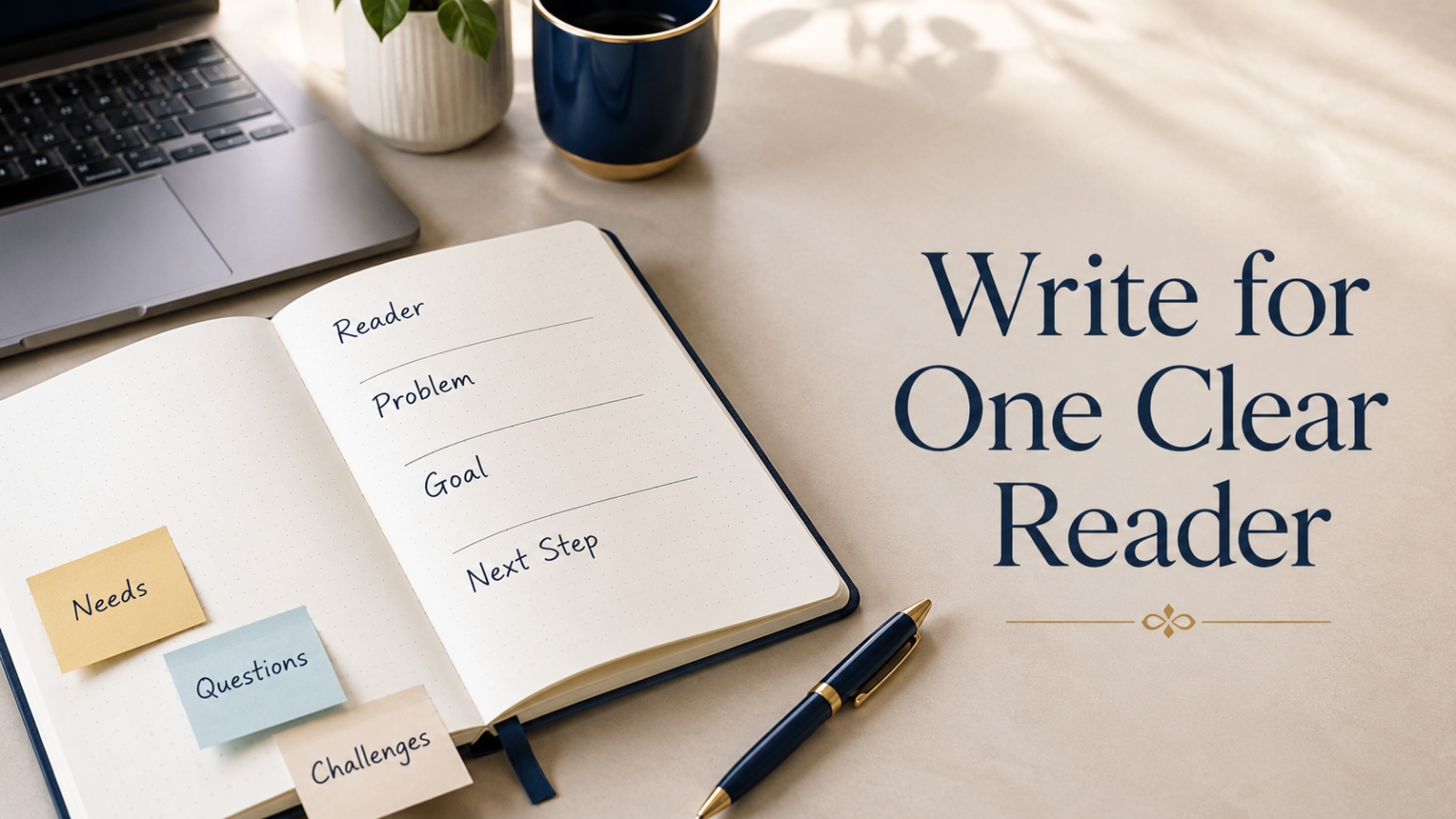
If you already own Blogger’s Success Toolkit, log in to the Blogger Success Blueprint members area and use the planning resources to clarify your reader before writing your next post.
Choose one reader, one problem, and one useful next step.
Members Login:
https://bloggersuccessblueprint.com/members/
New to Blogger’s Success Toolkit?
Blogger’s Success Toolkit gives you a beginner-friendly path to choose your direction, plan useful content, write stronger titles, and begin building your blog with more structure.