A beginner-friendly way to turn useful content into an email list opt-in
A lead magnet can sound bigger than it needs to be.
The phrase itself feels a little technical, doesn’t it?
Like something that needs a funnel, a designer, a fancy PDF, and a whole afternoon of wrestling with tools.
But at its simplest, a lead magnet is just this:
A helpful resource you give readers in exchange for joining your email list.
That is all.
It does not need to be huge.
It does not need to be complicated.
It only needs to help the reader take the next small step.
And here is the part many beginners miss:
Your next lead magnet may already be hiding inside a blog post you have written or planned.
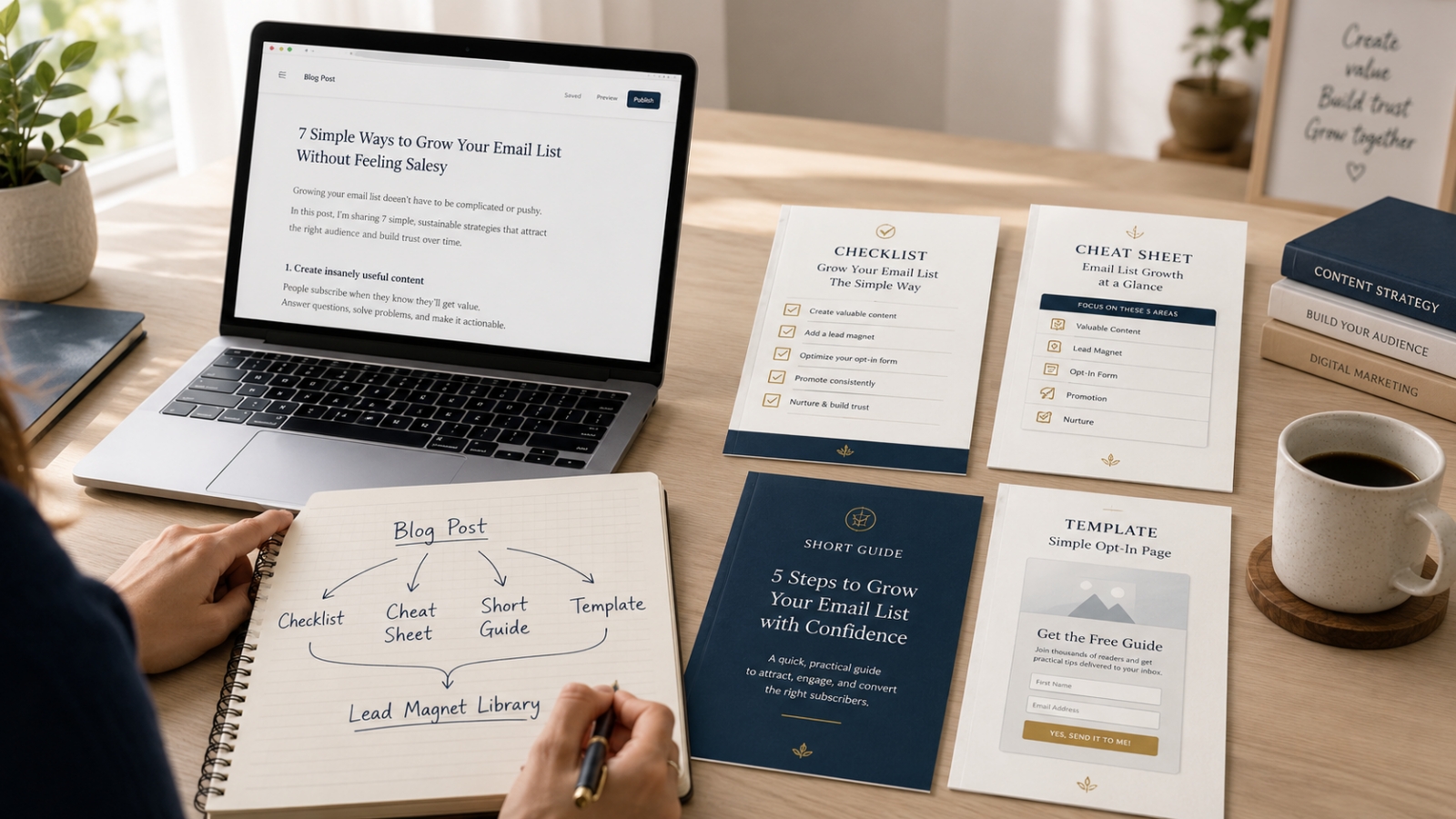
A checklist from your steps.
A cheat sheet from your tips.
A short guide from your explanation.
A template from your process.
You do not always need to create something brand new.
Sometimes, you only need to package one useful part of your content into something readers can keep.
Why Lead Magnets Matter
Most readers will not remember to come back on their own.
They may enjoy your post.
They may find it useful.
They may even think, “I should remember this.”
Then life moves on.
The browser tab closes.
The phone rings.
Dinner needs attention.
Another task takes over.
An email list gives you a way to stay connected.
And a lead magnet gives the reader a reason to join.
Not because you begged them to subscribe.
Not because you placed a random box at the bottom of the page.
But because you offered something useful that continues the help they were already receiving.
That is the best kind of opt-in.
It feels like a natural next step.
The Big Mistake: Making the Lead Magnet Too Big
Many beginners delay list-building because they think the lead magnet has to be impressive.
They imagine creating:
- a long ebook
- a full video training
- a complex workbook
- a giant resource library
- a polished mini-course
Those can work.
But they are not always the best place to start.
A big lead magnet can take too long to create.
It can also overwhelm the reader.
Sometimes, a simple one-page checklist is more useful than a long guide no one finishes.
Think about it.
If someone just read your article because they need help with a small problem, they may not want a 40-page manual.
They may want a clear next step they can use tonight.
That is why simple lead magnets often work so well.
The Simple Lead Magnet Framework
Use this framework to turn one blog post into a useful opt-in.
- Choose one helpful post
- Find the practical takeaway
- Turn it into a simple format
- Give it a clear name
- Connect it naturally to the post
Let’s walk through each step.
Step 1: Choose One Helpful Post
Start with one blog post that solves a clear problem.
The best posts for lead magnets usually include:
- steps
- checklists
- examples
- questions
- templates
- routines
- decision points
- mistakes to avoid
For this guide, let’s use a fresh example:
Blog Post Example
How to Create a Calmer Morning Routine Before Work
This post helps a busy working adult who feels rushed in the morning.
They want to start the day with less stress.
That is a useful problem.
And it can easily become a simple lead magnet.
Step 2: Find the Practical Takeaway
Now ask:
What part of this post would be useful for the reader to keep?
For the morning routine article, the practical takeaway might be:
- a morning routine checklist
- a night-before preparation list
- a 10-minute morning reset template
- a simple weekly routine planner
The best choice depends on what the post teaches.
If the post gives steps, create a checklist.
If the post gives options, create a cheat sheet.
If the post teaches a process, create a template.
If the post explains a bigger idea, create a short guide.
For our example, the easiest lead magnet is:
Morning Routine Checklist
It is simple.
It supports the post.
It helps the reader act.
Step 3: Turn the Takeaway Into a Simple Format
A lead magnet does not need to include everything from the article.
In fact, it should not.
It should make the next step easier.
For the morning routine example, the checklist might include:
Morning Routine Checklist
- Choose clothes the night before
- Prepare your bag, keys, and wallet
- Set one simple breakfast option
- Put your phone away for the first 10 minutes
- Choose the first task for the day
- Leave five extra minutes for breathing room
That is useful.
It is not fancy.
But the reader can use it.
That is what matters.
Step 4: Give the Lead Magnet a Clear Name
The name should tell the reader what they are getting and why it helps.
Avoid vague names like:
Free Morning Guide
That does not say much.
A clearer name would be:
The Calm Morning Checklist
Or:
10-Minute Morning Reset Checklist
Or:
The Night-Before Morning Routine Planner
The name should make the benefit obvious.
A good lead magnet name answers the reader’s quiet question:
“Why should I download this?”
Step 5: Connect It Naturally to the Blog Post
A lead magnet works best when it fits the post the reader is already reading.
Do not offer something random.
If the post is about creating a calmer morning routine, the opt-in should help with that exact topic.
For example, near the middle or end of the post, you could add:
Want the simple version of this routine? Download the Calm Morning Checklist and keep the steps nearby for tomorrow morning.
That feels natural.
The reader just learned the method.
Now you are offering a simple tool to help them use it.
That is a good opt-in.
Worked Example: Turning a Morning Routine Post Into a Lead Magnet
Let’s put the whole process together.
Original Blog Post
How to Create a Calmer Morning Routine Before Work
Reader
A busy working adult who feels rushed before leaving the house.
Reader Problem
Mornings feel chaotic because too many small decisions happen at the last minute.
Blog Post Outcome
The reader can create a simple routine that makes the morning feel less rushed.
Practical Takeaway
A checklist they can follow before work.
Lead Magnet Name
The Calm Morning Checklist
Lead Magnet Format
A one-page checklist.
What It Includes
- night-before preparation steps
- morning essentials
- one phone boundary
- one first-task prompt
- a small reminder to leave breathing room
Opt-In CTA
Download the Calm Morning Checklist so you can keep the routine simple tomorrow morning without trying to remember every step.
See how natural that feels?
The lead magnet does not interrupt the post.
It supports it.
Simple Lead Magnet Types You Can Create From Blog Content
You do not need to overthink the format.
Here are five beginner-friendly options.
1. Checklist
Best for posts with steps.
Examples:
- morning routine checklist
- small apartment reset checklist
- weekly cleaning checklist
- travel packing checklist
- study session checklist
A checklist helps the reader follow through.
2. Cheat Sheet
Best for posts with quick tips or reminders.
Examples:
- healthy snack cheat sheet
- phone-free evening cheat sheet
- grocery saving cheat sheet
- beginner workout form cheat sheet
A cheat sheet helps the reader remember the key points.
3. Short Guide
Best for posts that explain a topic in more detail.
Examples:
- beginner guide to better sleep habits
- simple guide to reducing clutter
- short guide to planning a calm weekend
A short guide works well when the reader wants a little more depth.
4. Template
Best for posts that teach a repeatable process.
Examples:
- weekly meal plan template
- study schedule template
- budget tracker template
- habit planning template
A template helps the reader fill in their own details.
5. Mini Worksheet
Best for reflective or planning-based posts.
Examples:
- goal-setting worksheet
- routine planning worksheet
- clutter decision worksheet
- weekly reset worksheet
A worksheet helps the reader think and apply.
How to Choose the Right Lead Magnet Format
Use this simple guide.
If Your Post Teaches Steps
Create a checklist.
If Your Post Shares Tips
Create a cheat sheet.
If Your Post Explains a Process
Create a template.
If Your Post Helps the Reader Decide
Create a worksheet.
If Your Post Gives a Bigger Lesson
Create a short guide.
The format should make the post easier to use.
That is the goal.
Not more content for the sake of more content.
More usefulness.
What to Include in a Simple Lead Magnet
A simple lead magnet should be easy to use.
Keep it clean.
Include:
- a clear title
- a short note explaining how to use it
- the main checklist, template, or guide content
- one practical next step
- your website or brand name
- a simple link back to a related resource if useful
You do not need to write a long introduction.
The reader downloaded it because they want help.
Give them the help quickly.
What to Avoid
Avoid Making It Too Long
A lead magnet should feel useful, not exhausting.
If the reader needs 45 minutes just to understand it, it may be too much.
Avoid Making It Too General
A broad lead magnet often feels weak.
Better Habits Guide is vague.
The 10-Minute Evening Reset Checklist is clearer.
Avoid Offering Something Unrelated
If the post is about morning routines, do not offer an unrelated budgeting guide.
Keep the opt-in connected to the post.
Avoid Overdesigning Before You Launch
A clean, simple PDF is enough to begin.
You can improve the design later.
Do not let formatting delay list-building.
Avoid Forgetting the Follow-Up Email
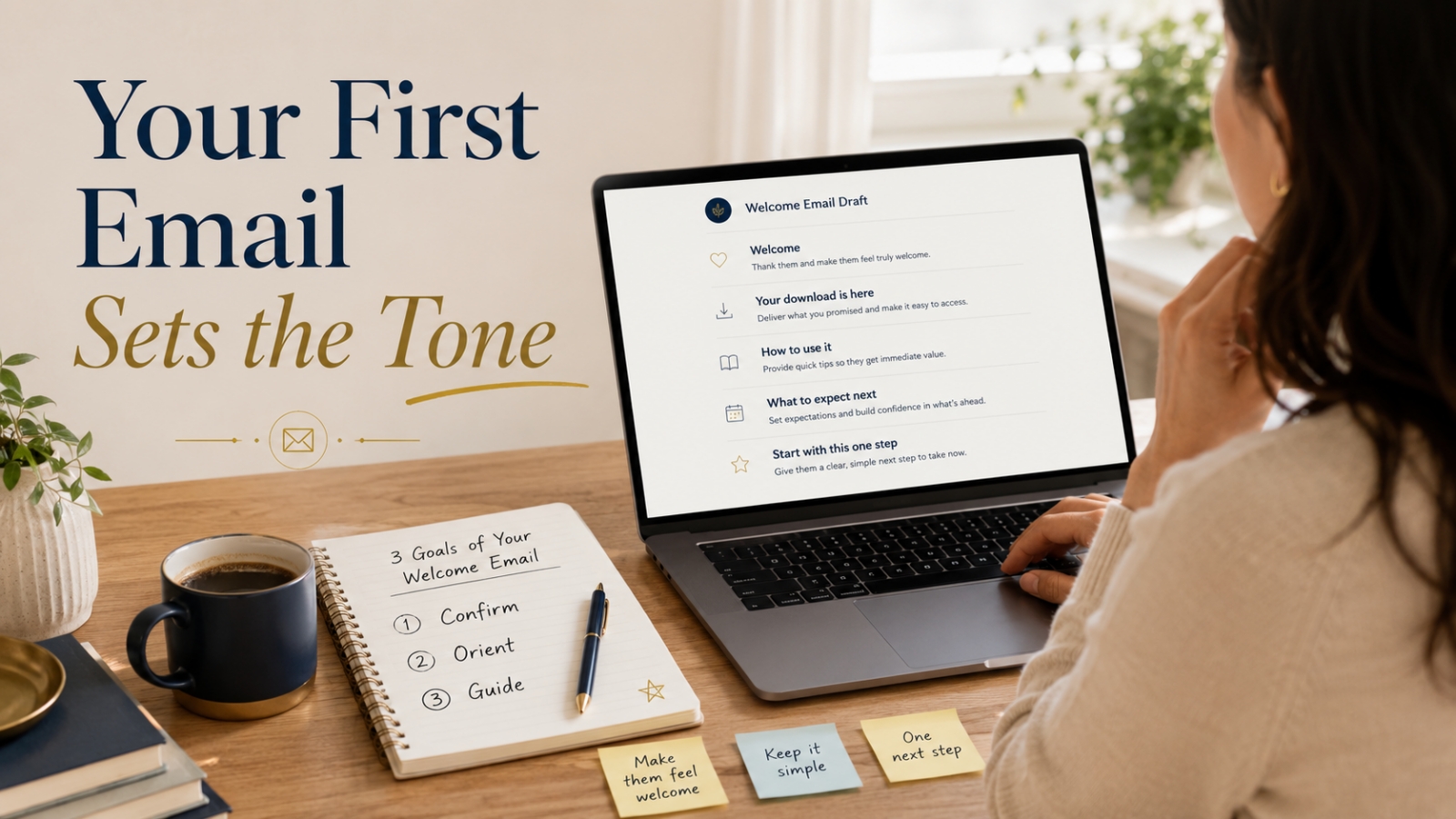
When someone downloads your lead magnet, send a welcome email.
Thank them.
Give them the resource.
Tell them what to expect next.
That first email helps the relationship begin well.
Quick Exercise: Create Your First Lead Magnet Idea
Use this simple worksheet.
My Blog Post Is
[Write the post title]
The Reader’s Problem Is
[Describe the problem]
The Practical Takeaway Is
[What would be useful to keep?]
The Best Format Is
[Checklist / cheat sheet / short guide / template / worksheet]
My Lead Magnet Name Is
[Write the name]
My Opt-In CTA Is
[Write one natural invitation]
Here is the morning routine example:
My Blog Post Is
How to Create a Calmer Morning Routine Before Work
The Reader’s Problem Is
Mornings feel rushed because too many small decisions happen at the last minute.
The Practical Takeaway Is
A simple checklist to follow before work.
The Best Format Is
Checklist
My Lead Magnet Name Is
The Calm Morning Checklist
My Opt-In CTA Is
Download the Calm Morning Checklist so you can keep the routine simple tomorrow morning without trying to remember every step.
That is a clear lead magnet idea.
Not big.
Not complicated.
Useful.
Final Thought: Your Lead Magnet Can Start Small
You do not need a huge resource to start building your email list.
You need a useful next step.
A checklist can help.
A cheat sheet can help.
A short guide can help.
A template can help.
A worksheet can help.
The best lead magnet often comes from something you already explained in your blog post.
So before creating from scratch, look at your existing content.
Ask:
What would help my reader use this lesson more easily?
That answer may become your next opt-in.
And that simple opt-in may become the start of a stronger reader relationship.
Use This With Blogger’s Success Toolkit
If you already own Blogger’s Success Toolkit, log in to the Blogger Success Blueprint members area and use the planning resources to turn one helpful post into a simple lead magnet idea.
Start with one checklist, cheat sheet, short guide, template, or worksheet.
Members Login:
https://bloggersuccessblueprint.com/members/
New to Blogger’s Success Toolkit?
Blogger’s Success Toolkit gives you a beginner-friendly path to choose your direction, plan useful content, write stronger titles, and begin building your blog with more structure.