A practical guide to building a focused starter product buyers can understand, use, and complete.
Big products can feel exciting.
A full system.
A complete course.
A giant toolkit.
A huge bundle with every possible file inside.
At first, it sounds impressive.
But sometimes, bigger is not better.
Sometimes, bigger is simply heavier.
Heavier to create.
Heavier to explain.
Heavier to sell.
Heavier for the buyer to use.
And that is where many beginners get stuck.
They think they need to build the big product first before they can launch anything meaningful.
But often, the smarter move is to create a smaller offer.
One focused product.
One clear problem.
One useful result.
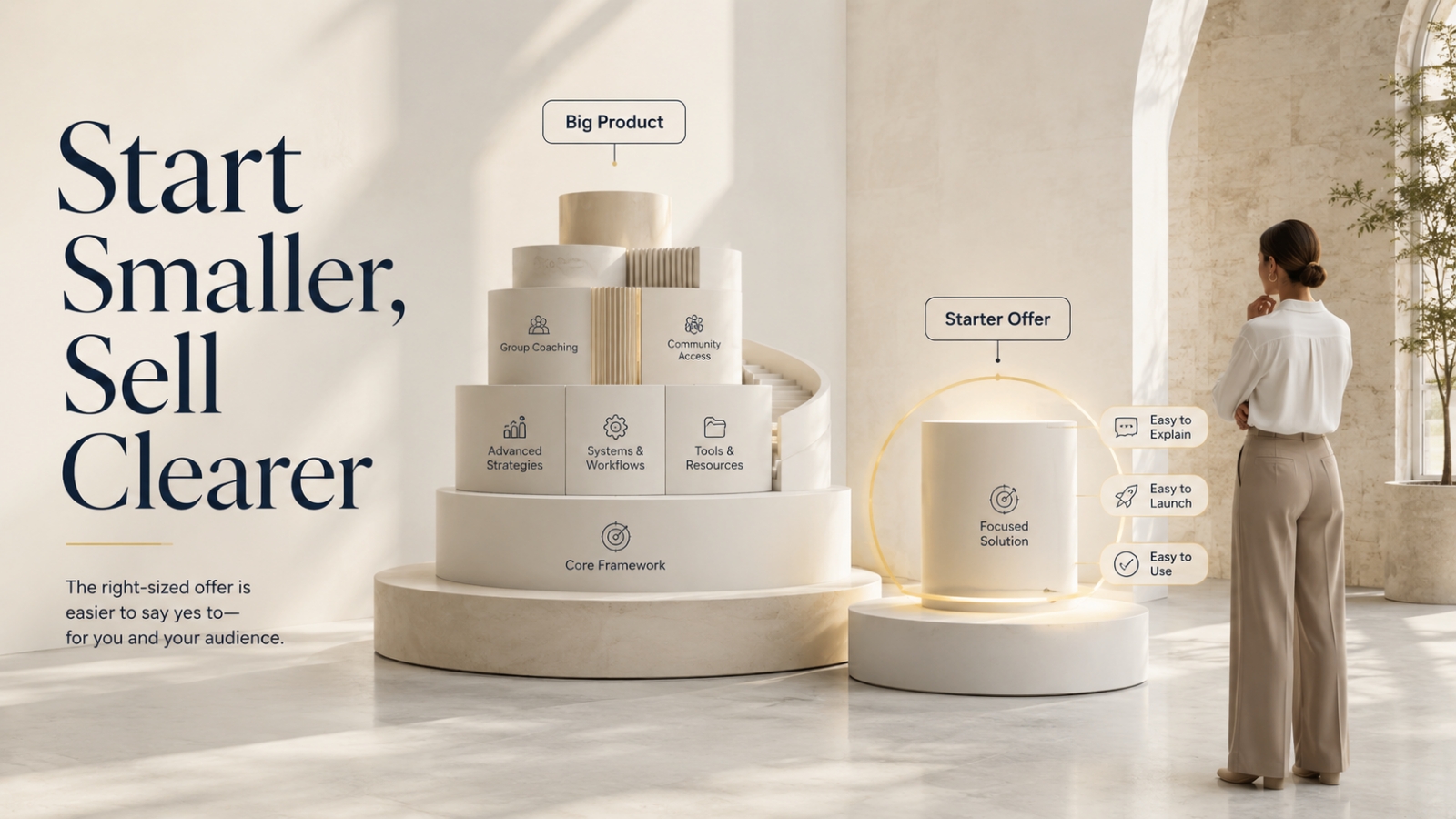
That kind of offer can be easier to finish, easier to explain, and easier for buyers to act on.
Why Smaller Offers Matter
A smaller offer gives you a practical way to begin.
It helps you avoid the pressure of building a huge product before you understand what your buyers actually need.
This is especially useful if you are working with PLR, templates, checklists, guides, or digital product assets.
You may have a lot of material available.
But having more material does not mean you should turn everything into one large product.
Sometimes, the better product is the smaller one that solves a clear problem quickly.
A small offer can help buyers:
- understand the promise faster
- use the product sooner
- complete the resource without overwhelm
- trust your teaching style
- experience a small result
- feel ready for the next step
That is powerful.
A smaller offer can become the first doorway into your bigger product path.
The Big Mistake Beginners Make
The big mistake is thinking a product must be large to feel valuable.
This often leads to overloaded products.
The creator starts with one useful idea.
Then adds another guide.
Then a bonus.
Then a template pack.
Then an email sequence.
Then a checklist.
Then more files because the offer needs to “look big.”
Soon, the product becomes harder to explain.
The buyer sees the long list and thinks:
“This looks useful… but where do I begin?”
That is not clarity.
That is clutter.
A strong offer does not need to be huge.
It needs to be clear.
If a smaller product helps the buyer solve one real problem, it has value.
The Light Offer Strategy Framework
Before creating a big product, use this simple framework.
Ask:
- Is the buyer still early in the journey?
- Is the problem small but urgent?
- Can one focused resource solve part of the problem?
- Would a big product feel overwhelming?
- Can this smaller offer lead naturally to a bigger next step?
If the answer is yes, a smaller offer may be the better move.
Let’s walk through each question.
Step 1: Check the Buyer’s Stage
A smaller offer works well when the buyer is still early.
They may not be ready for a full system yet.
They may be thinking:
- I need a simple starting point.
- I do not know what to do first.
- I want help with one specific task.
- I am not ready for a big course.
- I need something I can use quickly.
That kind of buyer often responds better to a focused starter product.
For example, a beginner digital product seller may not be ready for a full launch system.
But they may need:
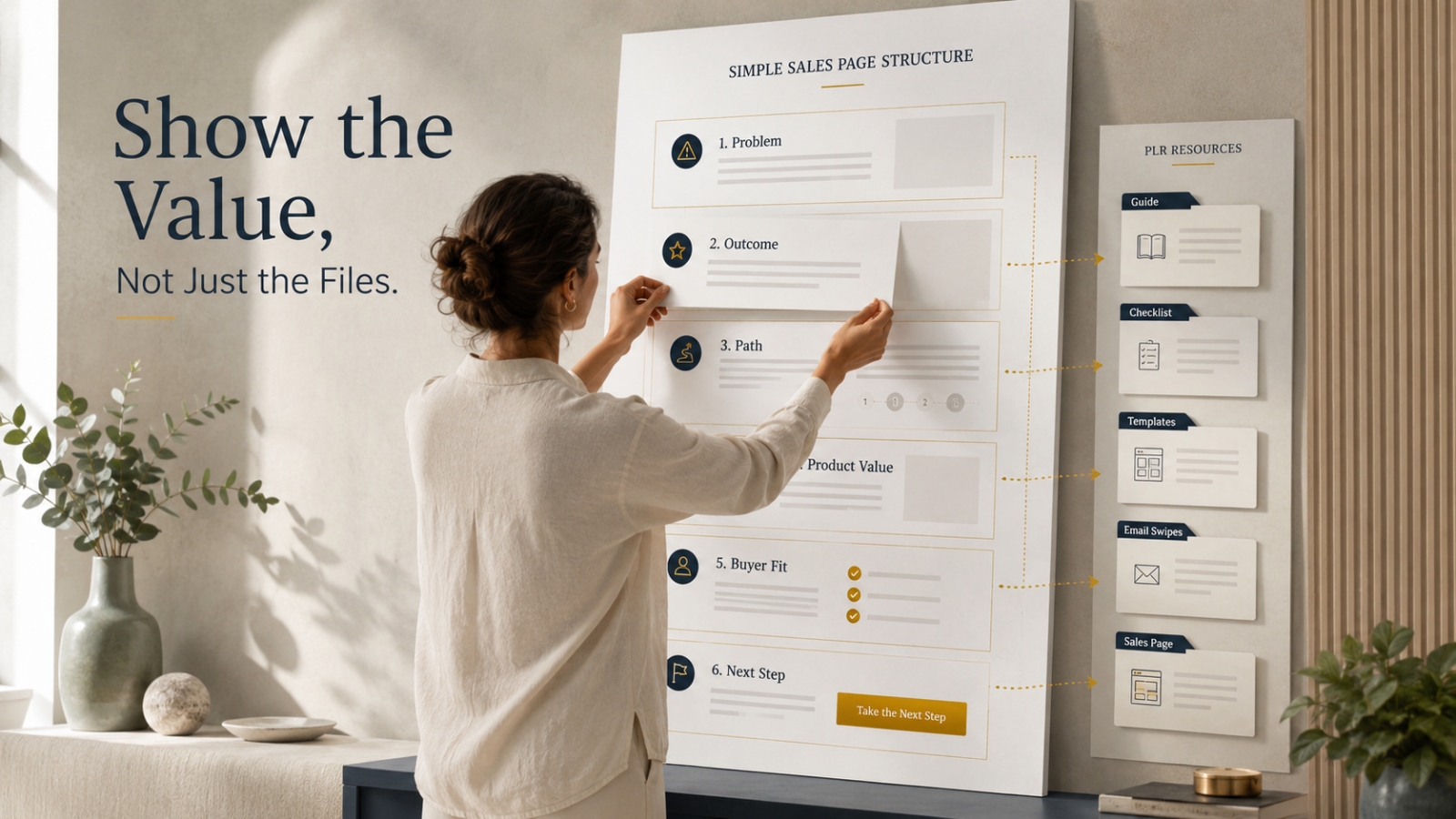
A Simple Sales Page Outline for First-Time Product Sellers
That is easier to understand.
It meets them where they are.
Step 2: Choose One Small but Real Problem
A good smaller offer solves a problem that feels specific.
Not everything.
One thing.
For example:
A broad problem might be:
I need help launching a digital product.
That could become a large product.
But a smaller problem might be:
I do not know what sections to include on my first sales page.
That could become a starter product.
Examples of smaller offer problems include:
- writing the first welcome email
- creating a simple product checklist
- outlining a sales page
- planning launch bonuses
- improving a product title
- creating a lead magnet idea
- mapping a simple delivery page
- writing benefit bullets
These are small enough to solve clearly.
And clear is what makes a starter offer work.
Step 3: Create One Focused Resource
A smaller offer should not feel like a mini version of a giant course.
It should feel complete for the specific job it promises to do.
For example, if the small offer is:
First Sales Page Outline Kit
It could include:
- one sales page outline
- one section-by-section guide
- one headline prompt sheet
- one final review checklist
That is enough.
The product does not need to include email marketing, traffic training, funnel setup, video scripts, bonuses, and affiliate tools.
Those can come later.
The smaller offer should help the buyer finish one job.
Step 4: Make the Promise Easy to Explain
A smaller offer should have a simple promise.
The buyer should understand it quickly.
For example:
Create a simple sales page outline before you write your first product page.
That is clear.
It tells the buyer:
- what the product helps with
- when to use it
- what result to expect
- why it matters
Compare that to:
The Ultimate Digital Product Business Growth Success System
That may sound big.
But it is not clear.
A smaller promise often feels more believable because the buyer can picture the result.
Step 5: Connect It to the Next Step
A smaller offer can stand alone.
But it can also lead naturally to a bigger product later.
For example:
A small starter offer:
First Sales Page Outline Kit
Natural next step:
Full Digital Product Launch System
The smaller offer helps the buyer begin.
The bigger product helps them go further.
That is a healthy product path.
It does not force the buyer into everything at once.
It gives them a useful first step.
Worked Example: Turning a Big Product Idea Into a Smaller Offer
Let’s use a digital product example.
Big Product Idea
Complete Digital Product Launch System
This could include:
- product idea validation
- offer positioning
- sales page writing
- email marketing
- traffic planning
- bonus creation
- funnel setup
- checkout page guidance
- delivery page support
- launch calendar
- affiliate promotion materials
That could be a strong product.
But it is a lot.
For a beginner creator, it may also take a long time to build.
For a beginner buyer, it may feel like too much to use at once.
So let’s create a smaller offer first.
Smaller Offer Idea
First Sales Page Outline Kit
This focuses on one problem:
The buyer does not know how to structure the first sales page.
Now the product becomes easier to create and easier to explain.
What the Smaller Offer Includes
Core Resource: Sales Page Outline
A simple section-by-section outline showing the buyer what to include.
Sections may include:
- headline
- problem
- promise
- product overview
- what is included
- who it is for
- benefits
- proof or credibility
- bonus section
- final action step
Support Resource 1: Offer Clarity Worksheet
This helps the buyer clarify:
- who the offer is for
- what problem it helps solve
- what outcome it supports
- what makes the product useful
Support Resource 2: Headline Starter Prompts
This helps the buyer create headline options faster.
Support Resource 3: Final Review Checklist
This helps the buyer check the page before publishing.
That is a complete smaller offer.
It does not solve the whole launch.
It solves one useful part of the launch.
And that is the point.
Why This Smaller Offer Works
This smaller offer works because it is focused.
The buyer knows exactly why they need it.
They are not buying “everything about launching.”
They are buying help with one clear task:
Outline the first sales page.
That is easier to say.
It is easier to sell.
It is easier to use.
It also creates a natural next step.
After the buyer outlines the sales page, they may later need help with:
- launch emails
- bonus strategy
- funnel setup
- delivery pages
- promotion planning
Those can become future products, upgrades, or support resources.
A smaller offer can become the beginning of a larger product path.
When a Smaller Offer Is the Better Choice
A smaller offer may be the better choice when one or more of these are true.
The Buyer Needs a Starting Point
If the buyer is still early, a big product may feel intimidating.
A smaller offer can help them take the first step with less pressure.
The Problem Is Specific
If the problem can be solved with a worksheet, checklist, template, or short guide, it may not need a large product.
Keep the product matched to the problem.
You Need to Launch Faster
A smaller offer is usually easier to build.
That means you can test the idea sooner.
You can learn what buyers respond to before spending weeks or months building something larger.
The Big Product Feels Hard to Explain
If your big product takes five minutes to explain, it may be too broad.
A smaller offer can help you sharpen the message.
You Want to Build a Product Path
A smaller offer can become the first step in a larger path.
It helps the buyer begin, then points naturally to the next stage.
When a Bigger Product Makes More Sense
Smaller is not always better.
Sometimes a bigger product is the right choice.
A bigger product makes sense when:
- the problem has several connected stages
- the buyer needs a full system
- each part supports the same larger outcome
- the product path is clear
- the buyer already understands the need
- you can explain the product simply
For example, a full launch system can make sense if it guides the buyer from product idea to sales page to email promotion to delivery.
That is a connected journey.
But even then, the product should still feel structured.
Big does not mean random.
Big products work best when every part supports one clear outcome.
What to Include in a Smaller Offer
A smaller offer usually works best when it includes a few focused pieces.
You might include:
- one core guide
- one template
- one checklist
- one worksheet
- one short example
- one quick-start instruction page
That is often enough.
For example, a small product called:
Bonus Planning Starter Kit
could include:
- a short guide to choosing supportive bonuses
- a bonus planning worksheet
- a bonus fit checklist
- three example bonus stacks
- one naming formula sheet
That is focused.
It helps the buyer solve one problem.
It does not try to become a full product creation course.
What to Leave Out of a Smaller Offer
A smaller offer should not become a hidden big product.
Leave out anything that does not directly support the promise.
For example, if the offer is about planning bonuses, you probably do not need:
- a full sales page course
- a full email marketing guide
- logo templates
- social media calendars
- traffic training
- product delivery tutorials
Those may be useful elsewhere.
But they do not belong inside this smaller offer.
Remember:
The smaller offer should feel complete, not crowded.
How to Price a Smaller Offer
A smaller offer should feel easy to say yes to.
That does not mean you undervalue it.
It means the price should match the scope, usefulness, and buyer stage.
A starter product is often positioned as:
- a first step
- a quick support resource
- a practical implementation tool
- a low-pressure way to begin
- a focused helper product
The key is to make the value clear.
Do not price only by page count.
Price by usefulness.
A short checklist that helps someone finish a task can be more valuable than a long guide they never use.
Common Mistakes to Avoid
Mistake 1: Making the Small Offer Too Broad
A smaller offer should solve one clear problem.
If it starts covering too much, it becomes harder to explain.
Keep it focused.
Mistake 2: Adding Too Many Bonuses
A small offer does not need a giant bonus stack.
One or two supportive extras may be enough.
Do not turn a light offer into a heavy one.
Mistake 3: Using a Vague Title
A smaller offer needs a clear name.
For example:
First Sales Page Outline Kit
is clearer than:
Digital Product Success Pack
The clearer name tells the buyer what the offer helps them do.
Mistake 4: Treating Small as Less Valuable
Small does not mean weak.
Small can mean focused.
Small can mean easier to finish.
Small can mean more useful for a buyer who wants one clear step.
Do not apologize for a smaller offer when it solves a real problem.
Mistake 5: Building the Big Product Before Testing the Small Idea
A smaller offer can help you test demand.
If buyers respond to the small version, that may show you where a larger product could go.
You can learn from the market before building the full system.
Quick Exercise: Plan a Smaller Offer
Use this worksheet before building your next product.
My Big Product Idea Is:
[Write the larger idea.]
One Smaller Problem Inside That Big Idea Is:
[Write one specific buyer problem.]
My Smaller Offer Could Be:
[Write the starter product name.]
The Buyer Will Use It To:
[Write the clear outcome.]
The Core Resource Will Be:
[Guide / template / checklist / worksheet / planner / swipe file.]
Support Pieces Could Include:
- [Support piece 1.]
- [Support piece 2.]
- [Support piece 3.]
What I Should Leave Out Is:
[Write anything that would make the offer too broad.]
This exercise helps you create a lighter offer with a clearer promise.
Not smaller for the sake of being small.
Smaller because the buyer’s next step is smaller.
Final Thought: Smaller Can Be Smarter
A big product can be valuable.
But it is not always the best first product.
Sometimes, the smarter move is to create something smaller, clearer, and easier to use.
A focused starter offer can help the buyer take one useful step.
It can help you launch with less pressure.
It can help you explain the value more clearly.
And it can become the first step in a larger product path later.
So before you build the big product, ask:
What is the smallest useful offer that helps my buyer move forward?
That question can save you time.
It can make your offer clearer.
And it can help your buyer act sooner.
Small does not mean weak.
Small can mean focused.
Small can mean practical.
Small can mean ready to use.
And sometimes, that is exactly what your buyer needs.
Use This With Blogger’s Success Toolkit
If you already own Blogger’s Success Toolkit, log in to the Blogger Success Blueprint members area and review one product idea through this smaller-offer lens.
Look for one specific buyer problem that could become a focused starter product, checklist, template, worksheet, or quick-start guide.
Members Login:
https://bloggersuccessblueprint.com/members/
New to Blogger’s Success Toolkit?
Blogger’s Success Toolkit gives you a beginner-friendly path to choose your direction, plan useful content, write stronger titles, and begin building your blog or product path with more structure.