
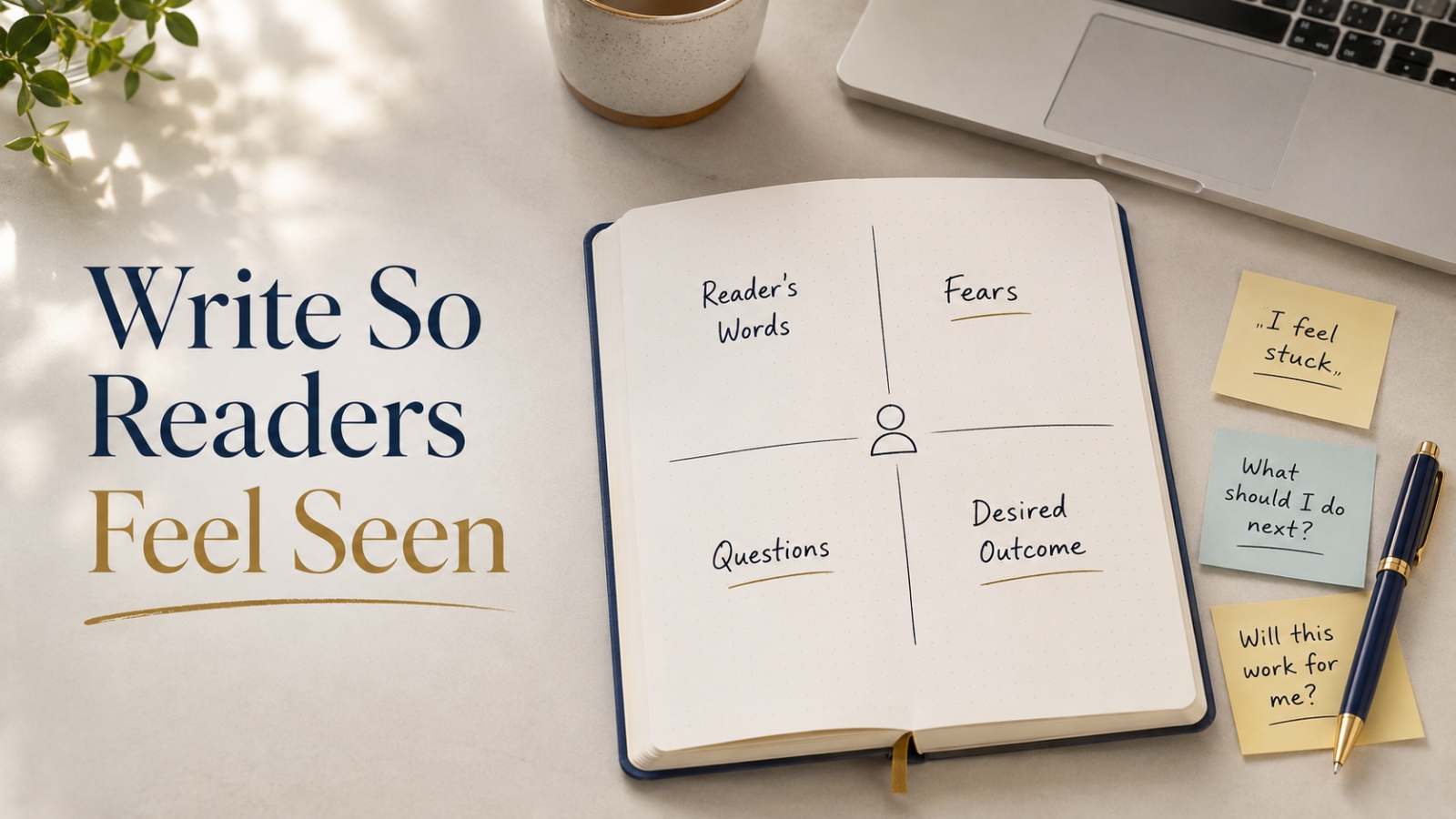
A simple guide to writing with empathy so your content feels closer, warmer, and more useful
A reader can tell when you are writing at them.
The words may be correct.
The advice may be useful.
The structure may be clean.
But something feels missing.
It feels distant.
Like the article understands the topic, but not the person reading it.
That is where empathy-based writing matters.
Because readers do not only want information.
They want to feel like you understand the moment they are in.
The frustration.
The question.
The small fear they may not say out loud.
The result they quietly hope for.
When your writing reflects that, the reader leans in.
They think:
“Yes. That is exactly how it feels.”
That is the beginning of trust.
Why Feeling Understood Matters
People stay with content that feels relevant to their real life.
Not just their topic.
Their life.
If someone is struggling with bedtime battles as a new parent, they do not only need “sleep routine tips.”
They may also need to feel less alone.
They may need someone to say:
“You are not failing because bedtime feels hard.”
That kind of sentence matters.
It lowers the wall.
It helps the reader breathe.
And once they feel understood, they are more open to the guidance that follows.
Empathy does not make your writing softer in a weak way.
It makes your writing stronger because it connects before it teaches.
The Big Mistake: Giving Advice Before Showing Understanding
Many beginners rush into advice too quickly.
They see the problem and jump straight to the answer.
“Do this.”
“Try that.”
“Here are five steps.”
“Here is the solution.”
The advice may be useful.
But if the reader does not feel understood first, the advice can feel cold.
Think of a friend telling you they had a rough day.
If you immediately say, “Here are three things you should do,” it may not land well.
They may need you to first say:
“That sounds exhausting.”
Content works the same way.
Before you teach, connect.
Before you guide, show that you see the reader’s world.
The Empathy Writing Framework
Use this simple framework when you want your post to feel more human and reader-focused.
- Use the reader’s language
- Name their real frustration
- Reflect their hidden fear
- Answer their quiet question
- Point toward the desired outcome
Let’s walk through each step.
Step 1: Use the Reader’s Language
The reader’s language is the wording they would naturally use to describe the problem.
Not expert language.
Not polished marketing language.
Real language.
For example, a formal phrase might be:
Improve your child’s evening sleep transition.
That is accurate, but it sounds stiff.
A reader may say:
Bedtime has become a battle.
Or:
Every night turns into another negotiation.
That language feels more real.
If your reader would not say the phrase out loud, consider simplifying it.
How to Find Reader Language
Listen for phrases in:
- emails
- comments
- reviews
- support questions
- social posts
- conversations
- forums
- customer messages
Look for repeated words.
People often tell you exactly how the problem feels.
Your job is to notice.
Step 2: Name Their Real Frustration
Behind every search or click, there is usually a frustration.
The reader is not only looking for information.
They want relief from something.
For a new parent dealing with bedtime, the frustration may be:
- bedtime takes too long
- the child keeps asking for one more thing
- the parent feels tired before the routine even begins
- evenings no longer feel peaceful
- the parent feels guilty for getting irritated
When you name the frustration gently, the reader feels seen.
For example:
You finally reach the end of the day, but bedtime somehow becomes the hardest part.
That sentence is simple.
But it speaks to a real feeling.
Step 3: Reflect Their Hidden Fear
Readers often have fears they do not say directly.
They may wonder:
“Am I doing this wrong?”
“Is this my fault?”
“Should this be easier by now?”
“Why does everyone else seem to manage?”
You do not need to make the post dramatic.
Just acknowledge the fear with kindness.
For the bedtime example:
If bedtime feels messy right now, it does not mean you are a bad parent. It may simply mean the routine needs to become calmer and more predictable.
That sentence can help the reader relax.
It removes shame.
Then the reader is more ready to learn.
Step 4: Answer Their Quiet Question
Many readers come to a post with a question sitting underneath the obvious question.
The obvious question might be:
“How do I create a bedtime routine?”
The quiet question might be:
“How do I make bedtime less stressful without turning into the parent who keeps losing patience?”
That quiet question is important.
If you can answer it, your content feels much more personal.
For example:
You do not need a perfect bedtime system. You need a simple routine that helps both you and your child know what comes next.
That line answers the deeper worry.
It says:
“This can be simpler than you think.”
Step 5: Point Toward the Desired Outcome
Empathy should not leave the reader sitting in the problem.
It should guide them toward hope.
What does the reader really want?
For the bedtime example, they may want:
- a calmer evening
- fewer arguments
- a child who knows what to expect
- less guilt
- a simple routine they can repeat
So the content should point there.
For example:
The goal is not a perfect bedtime. The goal is a calmer rhythm your child can recognize and you can actually repeat.
That feels realistic.
It gives the reader something to move toward.
Worked Example: Writing for a New Parent Struggling With Bedtime
Let’s walk through a full example.
Broad Topic
Bedtime routine for children
This topic is useful, but broad.
Now let’s make it more reader-focused.
Clear Reader
A tired parent of a young child who resists bedtime.
Real Frustration
Bedtime takes too long and turns into a nightly negotiation.
Hidden Fear
The parent worries they are doing something wrong or losing patience too often.
Quiet Question
How can I make bedtime calmer without creating a complicated routine?
Desired Outcome
A simple bedtime rhythm that feels easier to repeat.
Now the article can speak with more empathy.
Before-and-After Example
Distant Version
“Parents should create a consistent bedtime routine to help children develop better sleep habits.”
This is not wrong.
But it feels distant.
It sounds like advice from a booklet in a waiting room.
More Empathetic Version
“You reach the end of the day already tired, and then bedtime begins. One more drink. One more story. One more question. Before long, the calm evening you hoped for has turned into another negotiation.”
This version feels closer.
It starts with the reader’s moment.
It names what is happening.
It does not judge.
Now the reader is more likely to trust what comes next.
How Empathy Changes the Rest of the Article
Once you understand the reader, the whole post improves.
The Opening Feels Warmer
Instead of starting with general facts, you start with the lived moment.
That makes the reader feel seen early.
The Advice Feels More Realistic
You stop giving perfect-world advice.
You give steps the reader can actually try.
For example:
- choose the same three bedtime steps each night
- keep the routine short
- give one gentle reminder before lights out
- use a calm phrase your child can recognize
- return to the routine without restarting the whole evening
The Tone Feels Kinder
Empathy softens the way you correct mistakes.
Instead of:
Stop being inconsistent with bedtime.
You might write:
If the routine keeps changing, your child may keep testing what happens next. Start with three repeatable steps and keep them simple.
That teaches without scolding.
The Ending Feels More Encouraging
A good ending should help the reader feel capable.
For example:
You do not need to fix every bedtime struggle tonight. Choose one small part of the routine to make calmer, and repeat it tomorrow. Small patterns can become steady rhythms.
That feels doable.
And doable matters.
What to Listen for Before You Write
Empathy-based writing begins before the writing.
It begins with listening.
Look for what readers actually say.
Listen for Their Exact Words
For example:
- “Bedtime is a battle.”
- “I feel guilty every night.”
- “My child keeps asking for one more thing.”
- “I just want evenings to feel calm again.”
These phrases are gold.
They show you the reader’s language.
Listen for Their Repeated Questions
Questions reveal what the reader is unsure about.
For example:
- “What time should bedtime start?”
- “How many steps should the routine have?”
- “What if my child refuses?”
- “How do I stay calm?”
These questions can become sections in your post.
Listen for Their Desired Outcome
People often tell you what they want in simple words.
They may say:
- “I want bedtime to feel calmer.”
- “I want fewer arguments.”
- “I want a routine we can stick with.”
- “I want to stop feeling like I am failing.”
Use that.
That is the emotional direction of your content.
Common Mistakes to Avoid
Mistake 1: Using Expert Language Too Early
Expert language can create distance.
Use simple reader language first.
You can explain deeper concepts later if needed.
Mistake 2: Sounding Like You Are Judging the Reader
Be careful with words like “should,” “must,” and “always.”
They can feel heavy.
Use guidance instead of scolding.
Mistake 3: Skipping the Emotional Side
Even practical problems have emotional weight.
A messy bedtime is not only a routine problem.
It can also create guilt, tiredness, frustration, and doubt.
Name that gently.
Mistake 4: Making the Reader’s Fear Bigger Than It Needs to Be
Empathy does not mean making everything dramatic.
Do not exaggerate the pain.
Reflect it honestly, then guide the reader forward.
Mistake 5: Offering Hope Without a Next Step
Encouragement is good.
But encouragement becomes stronger when it includes action.
Give the reader one simple next step.
Quick Exercise: Write With More Empathy
Before writing your next post, answer these questions.
What Words Does My Reader Use?
[Write their natural phrases]
What Frustration Are They Feeling?
[Name the real struggle]
What Hidden Fear Might They Have?
[Write the worry they may not say out loud]
What Question Are They Really Asking?
[Write the deeper question]
What Outcome Do They Want?
[Write the desired result]
One Empathetic Opening Line Could Be
[Write a warm first line]
Using the bedtime example:
What Words Does My Reader Use?
“Bedtime is a battle.”
What Frustration Are They Feeling?
They are tired and frustrated because the routine takes too long.
What Hidden Fear Might They Have?
They worry they are not handling bedtime well.
What Question Are They Really Asking?
How can I make bedtime calmer without making the routine complicated?
What Outcome Do They Want?
A calmer evening routine they can repeat.
One Empathetic Opening Line Could Be
“You reach the end of the day already tired, and then bedtime begins.”
That one line already feels closer to the reader.
Final Thought: Empathy Makes Advice Easier to Receive
Readers do not only want answers.
They want to feel understood before they are guided.
When you use their language, name their frustration, acknowledge their fears, answer their quiet questions, and point toward the outcome they want, your content feels warmer and more useful.
You are no longer speaking from a distance.
You are sitting beside them and saying:
“I see what is hard here. Let’s take the next step together.”
That is what empathy-based writing does.
It builds trust before it teaches.
And when readers trust you, they are far more likely to keep reading, take action, and come back for more.
Use This With Blogger’s Success Toolkit
If you already own Blogger’s Success Toolkit, log in to the Blogger Success Blueprint members area and use the planning resources to clarify your reader’s language, fears, questions, and desired outcome before writing your next post.
Start with the reader’s words before adding your advice.
Members Login:
https://bloggersuccessblueprint.com/members/
New to Blogger’s Success Toolkit?
Blogger’s Success Toolkit gives you a beginner-friendly path to choose your direction, plan useful content, write stronger titles, and begin building your blog with more structure.